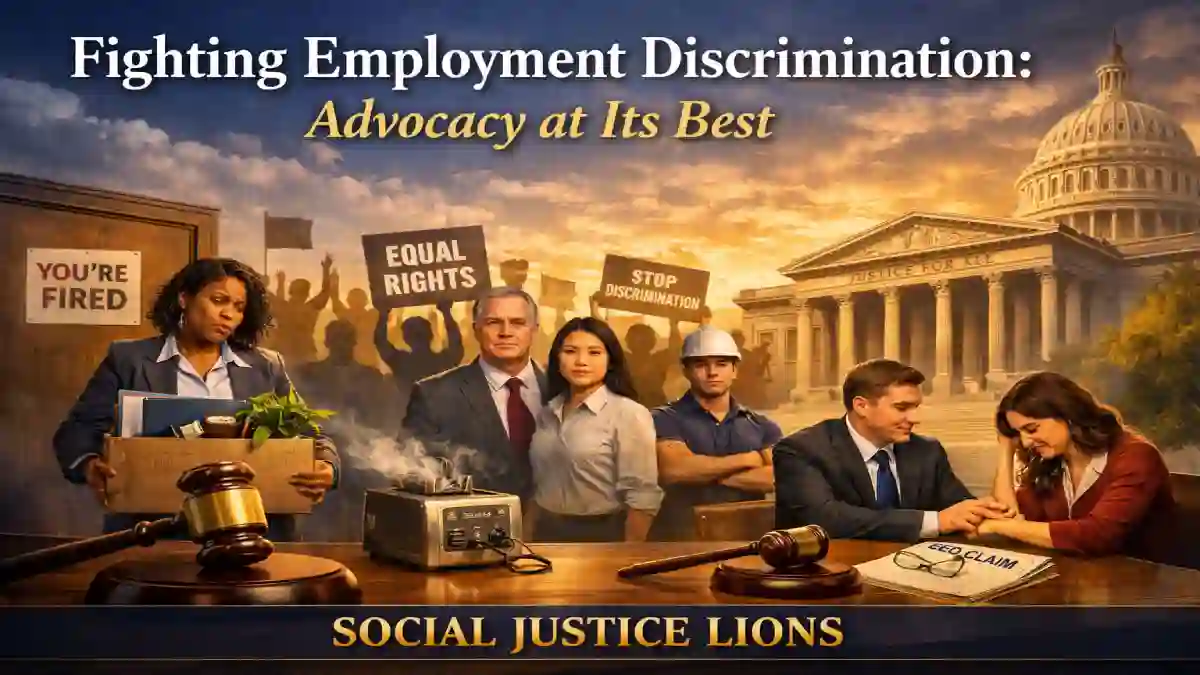
Fighting Employment Discrimination: Advocacy at Its Best
Fighting Employment Discrimination – Employment discrimination harms careers, dignity, and workplace opportunities. Workers deserve equal treatment regardless of gender, religion, disability, caste, age, or nationality. Social Justice Lions assists employees, employers, NGOs, and NRIs facing workplace discrimination disputes. Indian laws protect workers from unfair employment practices and unlawful bias. Therefore, affected individuals can pursue legal remedies before appropriate authorities. Common issues include wrongful termination, unequal pay, harassment, retaliation, promotion denial, and discriminatory recruitment. Employers must follow constitutional principles and labor regulations. Moreover, organizations should maintain transparent policies and grievance mechanisms. Timely legal intervention strengthens evidence and improves outcomes. Employees should preserve emails, messages, employment contracts, performance records, and witness details. Strong advocacy helps establish accountability and promotes workplace fairness. Professional legal representation ensures compliance with procedural requirements and protects fundamental employment rights effectively.
Fighting Employment Discrimination: Advocacy at Its Best – Social Justice Lions
Understanding Employment Discrimination Under Indian Law
Employment discrimination occurs when workers receive unfair treatment based on protected characteristics. Constitutional protections support equality and prohibit arbitrary discrimination. Several labor laws address workplace fairness and employee rights. Additionally, the Rights of Persons with Disabilities Act safeguards disabled employees. Sexual harassment complaints receive protection under the POSH Act framework. Courts examine employment policies, workplace conduct, and organizational decisions. Evidence may include communications, attendance records, appraisals, and witness testimony. Discrimination can appear during recruitment, training, promotion, transfer, or termination stages. Consequently, victims may seek legal remedies through courts and labor authorities. Employers should implement compliance programs and regular training initiatives. Proper workplace governance reduces legal risks significantly. Effective legal guidance helps identify violations and determine appropriate legal strategies. Early action often prevents escalation and preserves critical evidence.
Common Forms of Workplace Discrimination
Workplace discrimination appears in many forms across industries and sectors. Gender discrimination affects hiring, promotions, and compensation decisions. Religious discrimination may involve unfair workplace restrictions or exclusion. Disability discrimination arises when employers deny reasonable accommodations. Furthermore, caste-based discrimination remains a serious workplace concern. Age discrimination can impact recruitment and advancement opportunities. Retaliation often follows complaints regarding unlawful conduct. Employees may also face hostile work environments and verbal abuse. Legal professionals assess patterns of conduct and supporting evidence carefully. Therefore, detailed documentation remains essential. Common employment discrimination issues include:
- Unequal pay practices.
- Wrongful termination.
- Promotion denial.
- Harassment complaints.
- Retaliatory actions.
Comprehensive legal analysis helps establish violations and supports effective remedies. Strong advocacy promotes accountability and workplace equality.
Authorities, Forums, and Courts Handling Discrimination Cases
Different authorities address employment discrimination disputes depending on circumstances. Labor Commissioners often handle workplace grievances and statutory violations. Industrial Tribunals hear employment disputes involving workmen and industrial matters. Civil courts exercise jurisdiction under the CPC where applicable. High Courts may examine constitutional and service-related grievances. Additionally, Internal Committees address sexual harassment complaints under workplace policies. Police stations nearby may receive complaints involving criminal intimidation, assault, or harassment. The BNS, BNSS, and BSA govern criminal investigations and evidence procedures. Government departments may investigate labor law violations and compliance failures. Correct forum selection improves procedural efficiency. Skilled legal counsel evaluates jurisdiction and available remedies carefully. Strategic case management helps reduce delays and enhances prospects for meaningful relief and compensation.
Legal Remedies for Employment Discrimination Victims
Indian law provides several remedies for workplace discrimination victims. Courts and tribunals may order reinstatement where appropriate. Compensation may cover financial losses and emotional suffering. Furthermore, authorities may direct employers to cease discriminatory practices. Injunctions can prevent retaliation and further workplace misconduct. Corrective workplace policies often form part of settlement arrangements. Victims may also seek promotion benefits and salary differentials. Legal teams evaluate losses and prepare evidence-based claims. Effective advocacy focuses on both immediate and long-term interests. Available remedies include:
| Remedy | Purpose |
|---|---|
| Compensation | Financial recovery |
| Reinstatement | Job restoration |
| Injunction | Prevent misconduct |
| Promotion Benefits | Career correction |
| Policy Changes | Workplace reform |
Comprehensive legal support ensures appropriate remedies while protecting employee rights throughout proceedings.
Advocacy Strategies That Deliver Results
Employment discrimination claims require careful planning and evidence development. Social Justice Lions provides strategic legal assistance for workplace disputes. Lawyers assess facts, review records, and identify legal violations. Therefore, clients receive practical guidance tailored to specific circumstances. Effective advocacy combines negotiation, mediation, and litigation where necessary. Legal teams coordinate with experts and relevant authorities when appropriate. Strong representation improves communication during grievance proceedings. Moreover, early intervention often resolves disputes before prolonged litigation. Professional advocacy helps employees understand rights and obligations clearly. Employers also benefit from compliance reviews and preventive legal advice. Strategic case management reduces risks and supports efficient dispute resolution. Well-prepared claims improve credibility and strengthen positions before courts, tribunals, and regulatory authorities.
Building a Strong Employment Discrimination Case
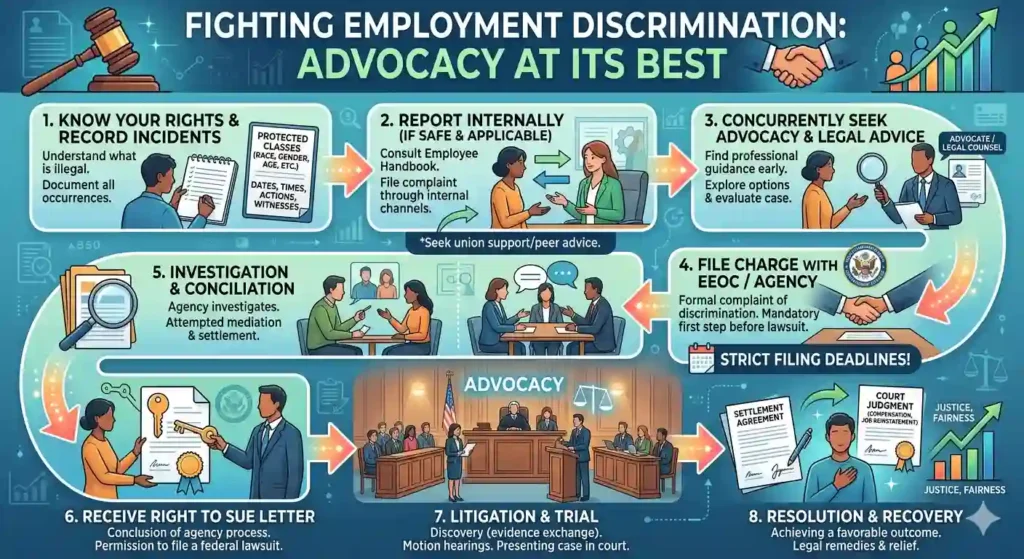
Successful discrimination claims depend upon evidence and procedural compliance. Employees should document incidents immediately after occurrence. Important records support credibility and strengthen legal arguments. Additionally, witness statements may corroborate workplace events. Essential steps include:
- Preserve emails and messages.
- Retain employment contracts.
- Record discriminatory incidents.
- Collect witness information.
- File internal complaints.
- Seek legal consultation.
- Maintain medical records where relevant.
Timely documentation prevents evidence loss and improves case preparation. Lawyers evaluate available material and identify additional proof requirements. Consistent records help establish discriminatory patterns and employer conduct. Proper evidence management often determines litigation success. Strong preparation supports negotiation efforts and improves outcomes during formal proceedings. Comprehensive legal guidance ensures procedural compliance and effective advocacy.
Employment Discrimination Issues Affecting Different Groups
Employment discrimination impacts employees, companies, NGOs, and NRIs differently. Employees often face unfair treatment affecting career progression and income. Companies may encounter compliance failures and reputational risks. NGOs frequently address systemic discrimination and worker rights concerns. Additionally, NRIs may experience unequal treatment during overseas assignments or recruitment. Workplace disputes often involve complex contractual and regulatory considerations. Legal professionals analyze facts, policies, and applicable statutes carefully. Effective solutions depend upon industry practices and organizational structures. Therefore, customized legal strategies remain essential. Organizations should promote inclusion, transparency, and accountability. Preventive compliance measures reduce workplace conflicts significantly. Strong legal support helps all stakeholders address discrimination concerns while maintaining lawful and productive workplace environments.
Criminal Aspects and Regulatory Enforcement
Certain discriminatory conduct may involve criminal liability. Threats, intimidation, stalking, and assault may attract action under the BNS. Police authorities investigate complaints following BNSS procedures. Courts assess evidence according to the BSA framework. Furthermore, employers must comply with workplace safety and anti-harassment obligations. Regulatory departments may review organizational compliance practices. Authorities examine policies, complaint mechanisms, and management responses. Failure to address misconduct may create additional legal exposure. Legal counsel assists clients during investigations and proceedings. Effective representation protects rights while ensuring procedural fairness. Cooperation with authorities often supports efficient dispute resolution. Robust enforcement mechanisms strengthen workplace accountability and discourage unlawful discriminatory conduct across sectors and industries.
Why Choose Social Justice Lions
Social Justice Lions provides dedicated representation in employment discrimination matters. The firm supports employees, employers, NGOs, and NRIs nationwide. Services include legal opinions, internal investigations, compliance audits, mediation, litigation, and appeals. Furthermore, lawyers develop customized strategies for each dispute. Clients receive practical solutions focused on rights protection and dispute resolution. Professional advocacy strengthens claims before tribunals, courts, and government authorities. The firm emphasizes evidence-based representation and procedural compliance. Strategic planning improves efficiency and reduces unnecessary litigation risks. Therefore, clients benefit from comprehensive legal support at every stage. Social Justice Lions remains committed to workplace equality, accountability, and justice. Early consultation helps preserve evidence, identify remedies, and build stronger legal cases.
FAQs
Q1. What constitutes employment discrimination in India?
Employment discrimination includes unfair treatment based on gender, caste, religion, disability, age, or other protected characteristics affecting workplace opportunities.
Q2. Can an employee challenge wrongful termination linked to discrimination?
Yes. Employees may seek reinstatement, compensation, injunctions, or other remedies before appropriate labor forums and courts.
Q3. Which authority handles workplace discrimination complaints?
Labor authorities, Industrial Tribunals, civil courts, High Courts, Internal Committees, and other competent forums may hear complaints.
Q4. Can criminal laws apply to workplace discrimination cases?
Yes. Criminal conduct involving threats, assault, stalking, or harassment may attract action under applicable provisions of the BNS.
Q5. What evidence supports an employment discrimination claim?
Emails, messages, appraisals, witness statements, contracts, attendance records, and complaint documents often support legal claims.
Q6. How can Social Justice Lions assist discrimination victims?
The firm offers legal advice, compliance reviews, mediation, litigation, appeals, and strategic representation before authorities and courts.
Read More
- Insights into Divorce Law: Compassionate Guidance
- Advocating for You in Criminal Defense Matters
- Excellence in Corporate Law: Our Approach Protects Your Business
- Mastery in Contract Law: Guidance When You Need It
- RBI & FEMA Compliance Specialists: Legal Services for Foreign Investments and International Payments
- Ministry of Labour & Employment