Strategies for Civil Litigation: Expertise at Your Service
Civil litigation is a wide and powerful area of law that helps people and businesses resolve disputes in a structured and lawful manner. Whether the conflict involves money, property, contracts, personal rights, or reputation, the civil court system provides a path to justice. However, litigation is rarely simple. It requires planning, skill, patience, and a deep understanding of courtroom processes. Therefore, having a clear strategy becomes the foundation for a strong case. At Social Justice Lions, we guide our clients with practical legal strategies that protect their interests and lead them toward fair and effective solutions.
In this article, we will explore essential civil litigation strategies, explain how they work, and show how expert legal support can make a meaningful difference. Each step is written in simple words so that anyone—individuals, families, companies, or organizations—can easily understand and apply these insights.
Strategies for Civil Litigation: Expertise at Your Service – Social Justice Lions
Understanding Civil Litigation
Civil litigation deals with disputes between private parties. Unlike criminal trials, civil cases focus on compensation, rights, obligations, and remedies rather than punishment. These cases may involve breach of contract, property disputes, employment disagreements, landlord–tenant issues, consumer complaints, recovery suits, injunctions, intellectual property rights, and much more.
Although the process appears straightforward, civil litigation often becomes complicated because it involves multiple documents, evidence rules, procedural timelines, and strategic decisions. This is why having a reliable advocate matters. With the right legal guidance, clients can move through the process smoothly and confidently.
The Importance of a Strong Legal Strategy
Every civil case is different. However, one thing remains constant: a case is only as strong as its strategy. A good strategy helps identify the core legal issue, the evidence needed, the possible risks, and the most effective remedies. It also allows the lawyer to anticipate the other side’s arguments and counter them efficiently.
At Social Justice Lions, we believe that strategy is more than preparation—it is protection. A well-planned approach can save time, reduce stress, and even encourage early settlements when appropriate.
Thorough Case Evaluation: The First Step
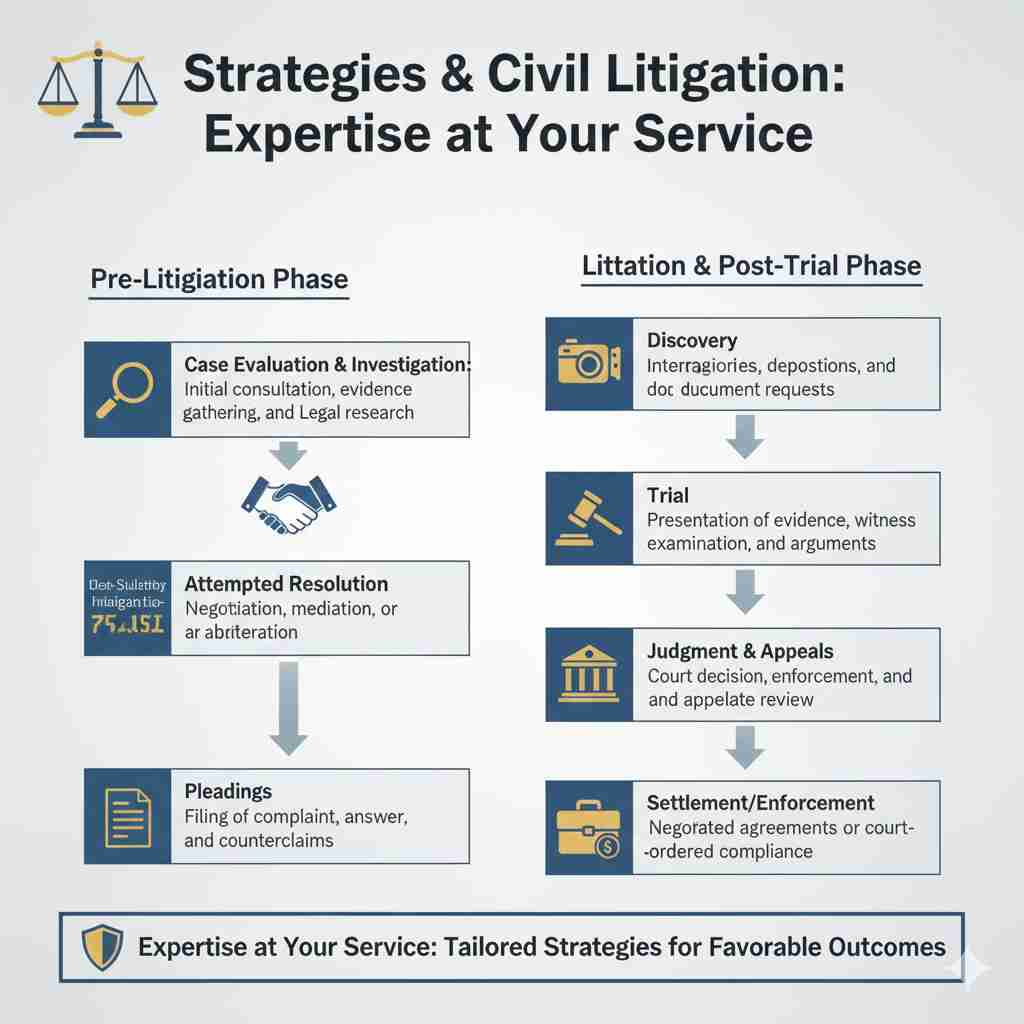
Before moving into the court system, our team carefully evaluates the case. We examine documents, listen to the client’s version, understand the timelines, and identify the strengths and weaknesses. This stage is crucial because it shapes every decision that follows.
A deep case evaluation helps answer essential questions such as:
- Is the claim legally valid?
- What evidence is available?
- Is a court case the best option, or should we try negotiation first?
- What is the ideal remedy or outcome?
Once these questions are answered, we create a roadmap that guides the entire litigation process.
Building Strong Evidence
Evidence is the backbone of civil litigation. Without it, even the most genuine claim may fail. Because of this, we help clients gather and organize all relevant documents, pictures, emails, agreements, CCTV footage, expert opinions, or financial records. We also guide them on how to preserve evidence and avoid mistakes that may weaken the case.
Moreover, we prepare witnesses thoroughly so they can confidently present the truth in court. Since courts rely heavily on clear, consistent, and credible evidence, our job is to present it in the strongest possible way.
Drafting Powerful Legal Documents
Civil litigation involves drafting several important documents, including notices, plaints, written statements, affidavits, and applications. Each document must be precise, clear, and legally sound.
At Social Justice Lions, we draft documents carefully so nothing is left unclear or open to misinterpretation. A well-written filing often influences how a judge views the case, so we make sure every document speaks strongly for our client.
Choosing the Right Remedies
Civil courts offer many remedies depending on the situation. These include:
- Monetary compensation
- Specific performance of a contract
- Permanent or temporary injunctions
- Recovery of possession
- Restoration of rights
- Damages for harassment or negligence
Selecting the right remedy is a strategic step. For instance, some clients may want compensation, while others may want immediate relief from further harm. We help clients understand their options so they can choose the remedy that best protects their interests.
Filing the Case and Following Court Procedures
Once the strategy is finalized, we file the case before the appropriate civil court. Filing requires accuracy because courts follow strict rules, formats, and timelines. Even a small error can lead to delays or dismissal. Therefore, we handle the process carefully, monitor follow-ups, and ensure that every deadline is met.
After filing, the court begins the litigation stages such as summons, written statements, framing of issues, witness examination, cross-examination, arguments, and judgment. Through each stage, we stay fully involved and guide the client with clarity.
Effective Courtroom Representation
Courtroom advocacy is not simply about speaking loudly or passionately. It is about presenting facts with logic, confidence, and respect for the law. Our lawyers prepare thoroughly so that every argument is strong and supported by evidence.
During hearings, we present evidence, question witnesses, challenge weak claims, and highlight facts that support our client’s position. We remain calm, focused, and persuasive because we understand that a well-delivered argument can shape the outcome of the case.
Negotiation and Settlement Options
Not every civil dispute requires a long trial. In fact, many clients prefer quicker, cost-effective solutions. Because of this, we explore negotiation and settlement opportunities at the right time. A good settlement can save years of litigation and reduce emotional stress. However, we only recommend settlements that are fair and protect the client’s rights.
Our negotiation approach is firm yet reasonable. We understand that clients want closure, but they also want justice. Balancing both goals is an essential part of our strategy.
Alternative Dispute Resolution (ADR)
Civil litigation also includes alternative methods like mediation and arbitration. These processes are faster, more flexible, and more private than traditional courts. Whenever suitable, we guide clients to ADR because it offers effective solutions without the long waiting periods of civil courts.
Managing Litigation Risks
Every case involves risks such as delays, increased costs, unpredictable outcomes, and emotional stress. One of our key responsibilities is to manage these risks. We keep clients informed, prepare them for possible challenges, and adjust strategies when required.
Communication is vital here. We remain transparent so clients always understand where the case stands and what to expect next.
Using Technology for Better Litigation
Modern civil litigation benefits greatly from technology. At Social Justice Lions, we use digital tools for research, document management, case tracking, and evidence organization. This helps speed up the process and ensures accuracy.
We also use technology to communicate clearly with clients through emails, online meetings, and secure document sharing.
Support Beyond the Courtroom
Civil litigation affects clients emotionally, financially, and mentally. Therefore, we believe in providing support beyond legal representation. We guide clients with patience, answer their questions, and stand by them until the final result.
Our goal is not only to win cases but also to restore peace, fairness, and stability in our clients’ lives.
Frequently Asked Questions
Civil litigation is the legal process used to resolve disputes between individuals, businesses, or organizations through the civil court system. Someone should consider filing a civil case when negotiations fail and when they need a lawful remedy such as compensation, recovery of property, or enforcement of rights. It is best to consult a lawyer to understand if litigation is the right option.
Evidence is the foundation of every civil case. It proves facts, supports claims, and helps the judge understand the truth. Strong evidence such as documents, emails, agreements, photos, and witness statements can significantly increase the chances of success. A good lawyer helps clients collect and organize evidence effectively.
The duration of a civil case depends on factors like court workload, complexity of issues, number of witnesses, and the parties’ cooperation. Some cases settle early, while others may take months or years. A clear strategy, timely filings, and strong preparation help reduce delays. Lawyers also explore quicker solutions like mediation whenever suitable.
Negotiation and settlement are important because they offer faster, cost-effective solutions. Many clients prefer resolving disputes without a lengthy trial. If both parties agree, the case can end with a fair settlement. Lawyers help clients negotiate confidently while protecting their legal rights.
A litigation lawyer guides clients through every stage—evaluating the case, gathering evidence, drafting documents, filing suits, appearing in court, and offering strategic advice. With strong advocacy and planning, the lawyer increases the chances of a successful outcome and reduces stress for the client.
Conclusion
Civil litigation is a journey that requires legal knowledge, strategic planning, and strong representation. From evaluating the case to gathering evidence, drafting documents, arguing in court, negotiating settlements, and managing risks, each step plays a vital role in achieving justice.
At Social Justice Lions, we combine experience, strategy, and compassion to deliver strong legal support. We guide clients with clarity, confidence, and commitment, ensuring that they receive justice with dignity. With the right litigation strategy and expert legal assistance, every client can face civil disputes with strength and certainty.